 Cannabis Terpenes Guide: Shop by Aroma and Flavor
Terps Talk: A Beginner’s Guide to Cannabis Terpenes
For adults 21 and over. Aroma and effect descriptions below reflect common consumer impressions, not medical claims.
Most people shop for cannabis by three things: THC percentage, strain name, and whether it’s labeled indica, sativa, or hybrid. Seasoned consumers know a fourth factor
often matters more, terpenes. These are the natural aromatic oils that give each strain its smell and flavor, from bright citrus to deep pine to sweet fuel. They show up all over nature (in citrus peels, pine needles, lavender, and black pepper), and cannabis is especially rich in them. Learning even a handful of terpene names can change how you shop, helping you predict how a strain will smell, taste, and come across before you ever open the jar.
Why terpenes matter
Beyond aroma and flavor, terpenes are a big part of what gives each strain its personality. They’re also central to the “entourage effect”, the idea that cannabis compounds work together, so terpenes and cannabinoids shape the overall character as a group rather than in isolation. The practical upshot: two strains with the same THC number can feel like completely different products, largely because of their terpene makeup. That’s why shopping by terpene profile is often more useful than shopping by THC alone.
Six terpenes worth knowing
Limonene: the citrus one
Aroma: lemon, orange, citrus zest. If a jar smells like fresh-cut citrus, limonene is likely in the mix. It’s commonly associated with bright, upbeat, daytime-leaning profiles, which is why many shoppers reach for limonene-rich strains before social plans or creative work.
Found in strains like: Wedding Cake, OG Kush, Lemon OG.
Myrcene: the mellow one
Aroma: earthy, musky, a little clove-like. Myrcene is one of the most common terpenes in cannabis and tends to show up in relaxed, wind-down cultivars, a favorite for lazy Sundays and end-of-day sessions. It appears across categories but is especially common in indica-leaning strains.
Found in strains like: Blue Dream, Harlequin, Tangie.
Pinene: the fresh one
Aroma: pine forest, fresh herbs. Just like it sounds, pinene smells like a walk through the woods after rain. It exists as alpha- and beta-pinene and is often linked to clear-headed, focused-feeling profiles, which makes pinene-forward strains popular with people who want to stay productive and creative.
Found in strains like: Jack Herer, Blue Dream, Trainwreck.
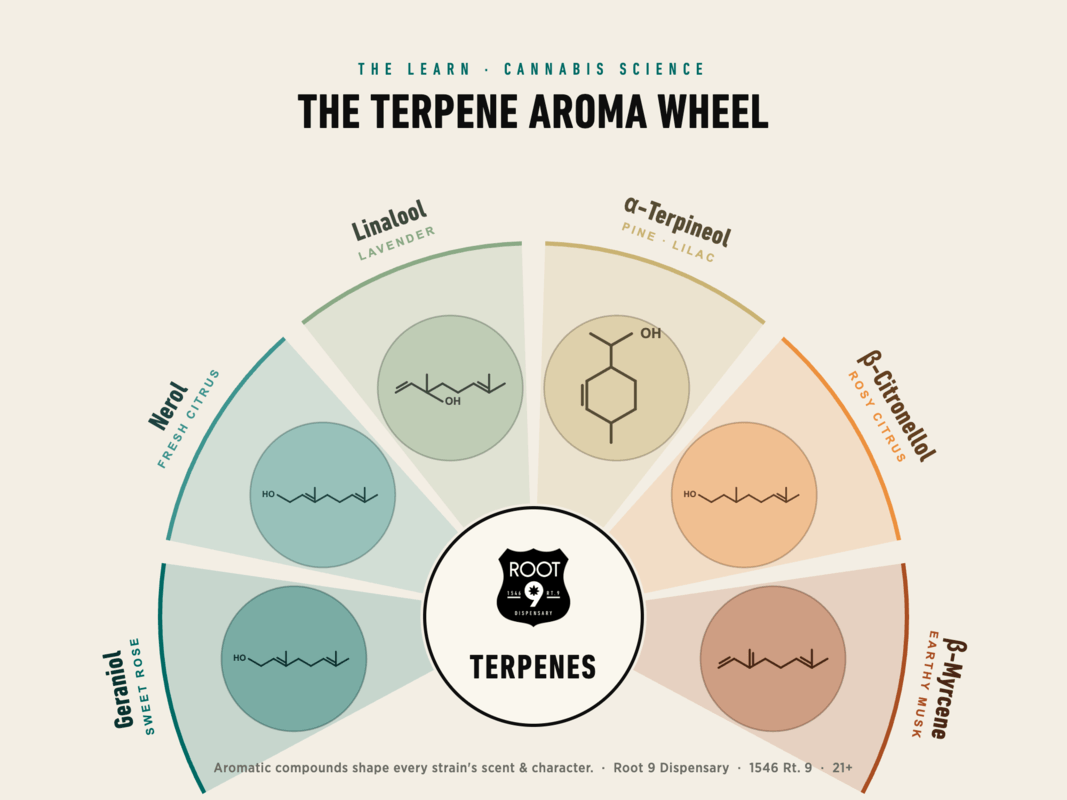
Linalool: the floral one
Aroma: floral, lavender. Linalool is the same compound that gives lavender its signature scent. In cannabis it brings a soft, floral note that many associate with calm, mellow,
nighttime-leaning profiles. If you gravitate toward gentler evening strains, linalool is worth seeking out.
Found in strains like: Amnesia Haze, LA Confidential.
Caryophyllene: the spicy one
Aroma: black pepper, spice, warmth. Caryophyllene stands out for its peppery, gas-meets-dessert character, and it shows up in everything from sweet to fuel-forward strains. It’s a common pick for people who like a warm, grounded, balanced profile.
Found in strains like: Bubba Kush, Sour Diesel, Gelato.
Terpinolene: the wild card
Aroma: sweet and floral, with a piney edge. Less common than the others, terpinolene has a complex, hard-to-pin-down scent and often appears in lively, cerebral cultivars. Consumers frequently describe terpinolene-rich strains as bright and buzzy.
Found in strains like: Jack Herer, Ghost Train Haze, Banana Kush.
Six more terpenes you’ll start to notice
Humulene: the earthy one
Aroma: hops, woody, earthy. The same terpene that gives beer its character, humulene shows up in spicy, grounded strains and often travels alongside caryophyllene.
Found in strains like: Headband, White Widow.
Ocimene: the sweet-herbal one
Aroma: sweet, herbal, citrusy. Ocimene brings a fresh, almost tropical brightness and appears in lively, fragrant cultivars.
Found in strains like: Dutch Treat, Golden Goat.
Bisabolol: the soft one
Aroma: gentle, floral, slightly sweet, also found in chamomile. Bisabolol adds a delicate, mellow note and is less common, which makes it a treat to spot.
Found in strains like: Harle-Tsu, ACDC.
Nerolidol: the woody one
Aroma: woody and bark-like, with a faint floral edge. Nerolidol rounds out complex profiles and shows up across a range of strains in small amounts.
Found in strains like: Jack Herer, Skywalker OG.
Geraniol: the rosy one
Aroma: rose and sweet florals, the same compound found in geraniums and citronella. Geraniol gives certain strains a soft, perfumed lift.
Found in strains like: Amnesia Haze, Headband.
Valencene: the citrus-zest one
Aroma: sweet orange and grapefruit, named for Valencia oranges. Valencene adds a juicy citrus pop to bright, summery profiles.
Found in strains like: Tangie, Clementine.
How terpenes combine
Terpenes rarely act solo, it’s the blend that defines a strain’s character. A few common pairings consumers describe:
• Limonene + pinene – bright and social
• Myrcene + linalool – heavier and laid-back
• Caryophyllene + humulene – warm and grounded
That’s the real argument for shopping by aroma: the combination tells a story the THC number can’t. Next time you’re at the counter, give the jar a sniff and ask what’s dominant, your nose is a surprisingly good guide.
Where terpenes fit with indica, sativa, and hybrid
The old indica/sativa/hybrid labels are a useful starting point, but they describe the plant’s structure and lineage more than how it will actually come across. Terpenes fill in the rest of the story. A “sativa” heavy in myrcene might feel more relaxed than its label suggests, while an “indica” rich in limonene can come across brighter than expected. Reading the dominant terpenes alongside the category gives you a much clearer preview than either one alone, it’s the difference between knowing a song’s genre and actually hearing the melody.
How to keep terpenes fresh
Terpenes are delicate and volatile, they evaporate and degrade with time, heat, light, and air. To get the aroma and flavor you paid for:
• Store flower in an airtight container in a cool, dark place.
• Keep it away from heat sources and direct sunlight.
• Avoid over-drying; a humidity pack helps hold the right moisture.
• Buy fresh, in amounts you’ll use within a reasonable window.
Mishandled flower can lose much of its aromatic punch, which is exactly why a fresh, well-stored jar so often outshines an older, higher-THC one.
Terpenes aren’t unique to cannabis
One of the easiest ways to understand terpenes is to notice them everywhere else. Limonene is what makes a lemon peel smell like a lemon; pinene is the scent of a pine
forest; linalool is the soul of lavender; caryophyllene gives black pepper its bite. Cannabis just happens to produce an unusually rich blend of them. Once you start connecting strain aromas to smells you already know, shopping by terpene becomes second nature.
Match the terpene to your plans
A simple way to put this to work is to think about your plans first, then shop for a matching aroma:
• Daytime, social, or creative: citrus-forward, limonene-rich profiles many describe as upbeat.
• Focus and fresh air: piney, pinene-leaning strains people associate with a clear head.
• Evening wind-down: earthy myrcene or floral linalool, commonly tied to mellow, laid-back sessions.
• Warm and grounded: peppery caryophyllene for a cozy, balanced vibe.
It’s not an exact science, your own chemistry always has the final say, but starting from the experience you want is a smarter entry point than starting from a THC number. (Again, these are aroma and lifestyle associations, not medical claims.)
Terpene FAQ
Do terpenes get you high?
No, terpenes aren’t intoxicating on their own. They shape aroma, flavor, and the overall character of a strain, and may interact with cannabinoids as part of the entourage effect, but the high comes from cannabinoids like THC.
Are higher terpene percentages better?
A robust terpene content usually signals fresh, well-grown, well-stored flower and a more flavorful experience. But “better” still comes down to which aromas and profiles you personally enjoy.
How do I find my favorite terpenes?
Pay attention to the strains you already love and check their dominant terpenes, you’ll often spot a pattern. From there, look for other strains that share those terpenes.
Shop by terpene at Root 9
You don’t have to memorize a chemistry chart to use any of this. The Root 9 online menu lists detailed terpene information on many products, so you can see a strain’s
dominant terpenes, expected aroma and flavor, and whether it leans daytime or nighttime before you visit. It’s an easy way to compare options, find profiles similar to strains you already love, and discover something new based on the vibe you’re after, not just the highest number on the shelf.
Cannabis is legal for adults 21 and over in New York through OCM-licensed dispensaries (see the NY Office of Cannabis Management). Explore products by terpene profile on the Root 9 menu, or visit Root 9 Dispensary in Wappingers Falls and tell our budtenders what you want your next session to smell, taste, and feel like.